
Empresa especializada, refinada, diferenciada e innovadora
Centro Provincial de Ingeniería Tecnológica
National High-Tech Enterprise
-
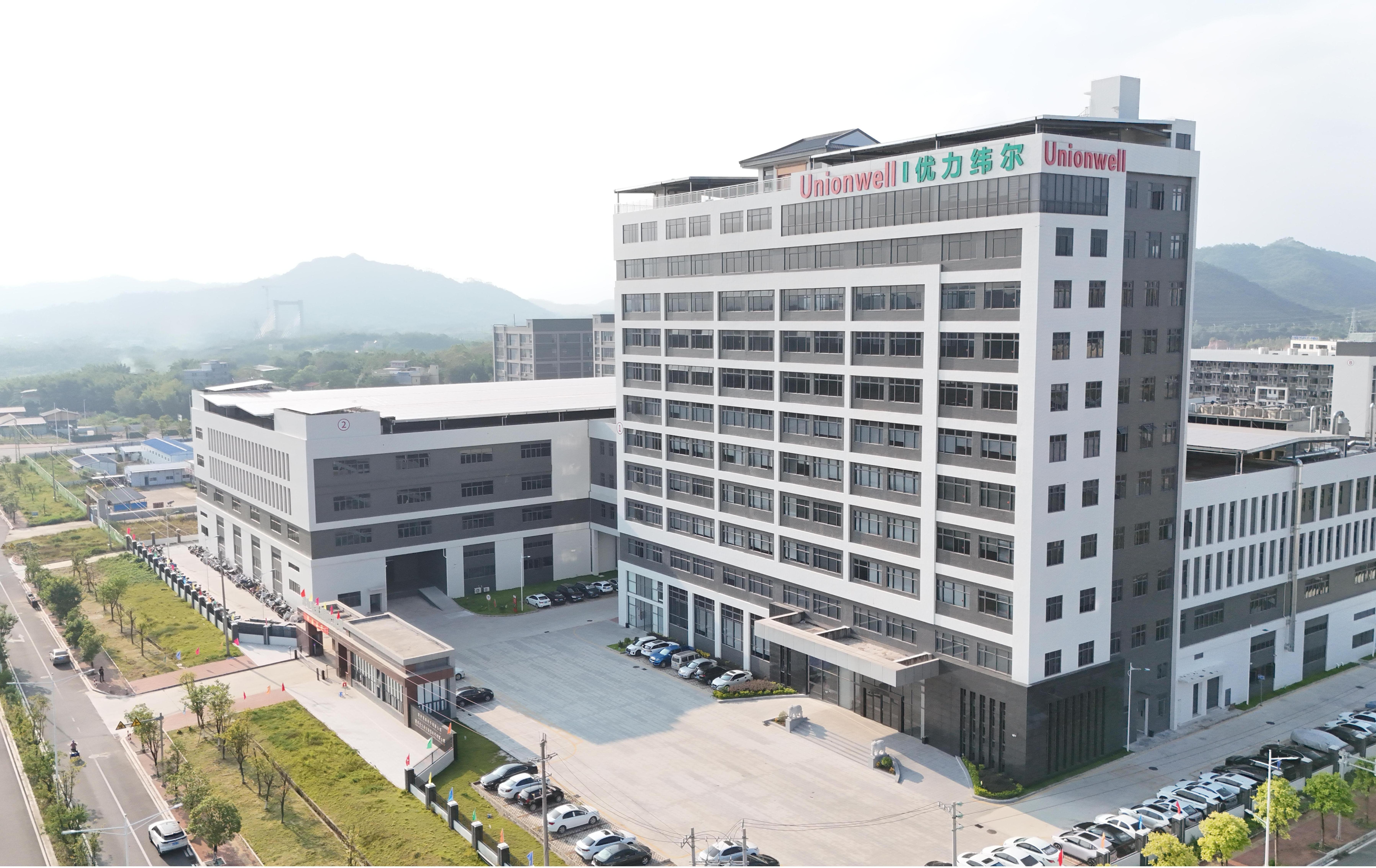
About UsHuizhou Unionwell Sensing & Control Electronics Co., Ltd. was founded in 2007 with a registered capital of 17 million yuan. At present, there is a team of more than 30 senior engineers with over 200 patents. The company fully implements digital systems and is a professional switch manufacturing enterprise that integrates product research and development, production, sales, and after-sales service. Current leading products: Micro switch series, waterproof micro switch series, automotive micro switch series, inductive shaft button switch series, rotary switch series, wind pressure switch series, refrigerator door switch series, detection switch series, etc. Ranked in the top 20% globally in EcoVadis assessment, all products comply with ROHS and REACH environmental requirements and have obtained certifications such as UL in the United States, ENEC/CE in the European Union, cUL in Canada, and CQC in China. Provide customers with competitive products and satisfactory services!
-
-
ServicesThe company has successfully obtained IATF 16949 automotive industry quality management system certification, IS0 9001 quality management system, IS014001, IS045001 environmental management system, and ISO50001 certification, ensuring excellent quality of products and services. All products have passed international safety certifications such as UL, cUL, ENEC, CE, CQC, and strictly comply with ROHS and REACH environmental standards, demonstrating our dual commitment to quality and environmental protection.

-
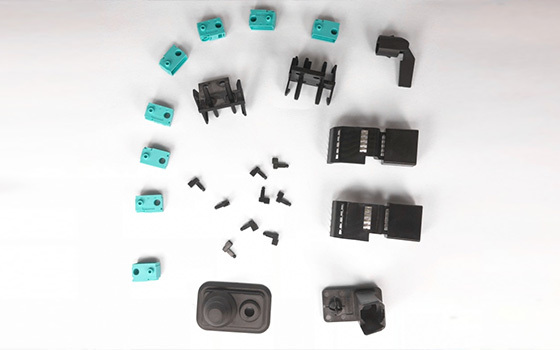
Customized
-

-
Contact Us


Principle and application of micro switch for ice maker
2026-06-16

I. Structural principle of micro switch
1. Workflow
Pressing the driving head with external force → Squeezing the quick action spring to store energy → Instantly bouncing at the critical point → Switching the moving contact from NC to NO; Removing the external force causes the spring to rebound and the contact to return to normally closed NC
2. Basic structure
Micro switches mainly rely on external force to press the driving head, hear a "click" sound to quickly switch between normally open/normally closed contacts, and transmit on/off signals to the main control board; Commercial/household ice makers are commonly used in humid and low-temperature environments, with IP65/IP67 waterproof seals (such as Unionwell G5W11 and G905 series), which are resistant to water vapor and not easily oxidized.
3. The complete internal structure of the micro switch includes:
Shell cover → Drive actuator head → Plastic base terminal → Static contact (NC/NO) → Quick action spring (Drive contact) → Limit support structure
Public end (C/COM)
Normally open contact (NO/NO) - only closes when pressed
Normally closed contact (NC/NC) - opens when pressed
Ice makers commonly use normally open type (triggered only when the ice is full/in place) or normally closed type (door open/arm lift disconnect signal)
Button/push rod (actuator) - pressed by ice filled arm, ice tray or door top
Spring+bending point (key) - achieving "fast movement"
4. The biggest difference between micro switches and regular button switches
The difference between the two lies in the triggering mechanism and sensitivity. The micro switch has a "quick action mechanism" inside, which can instantly complete circuit switching with minimal displacement; However, ordinary button switches rely entirely on manual pressure to directly push the contacts.
II. Application of Micro Switch in Ice Maker
1. Ice full micro switch (recommended G901 series micro switch)
Installation position: Side wall or top of ice storage box of ice maker
Work logic:
Ice not full: The baffle hangs down, the switch is normally closed and conductive, and the machine continues to make ice
Fill the top of the baffle with ice cubes, press the micro button → the contact opens, the motherboard receives a signal, stops the machine, stops cooling, and lights up the ice full light
After ice removal, the baffle will fall back, the switch will reset, and the ice making cycle will automatically restart
Fault:
Shutdown when there is very little ice, false alarm of full ice: switch stuck, baffle scale stuck, contact oxidation
Ice piled up without stopping, overflowing: switch spring failure, unable to disconnect
2. Ice thickness micro switch (de icing trigger) (recommended G901 series micro switch)
Installation position: metal probe swing arm above the evaporator ice tray
Function: Control ice thickness, switch de icing process
The ice layer gradually thickens, the contact probe lifts the swing arm, and the micro switch is pressed
The motherboard receives a signal: turn off the water pump, turn on the hot air solenoid valve, heat the evaporator to remove ice, and the ice cubes fall off
Fault: The ice block is too thin and repeatedly detaches/the ice block is too thick and hard to detach, often causing the switch to malfunction.
3. Safety micro switch for water tank/ice storage door (recommended G5W11 series micro switch)
Household desktop ice maker, commercial split machine:
Installation position: at the top cover or front door hinge.
Working principle: Open the cover/door → turn off the micro switch → cut off the power supply of the ice making motor or heater to ensure safe maintenance/ice removal.
Fault: Even after covering the door, it does not start, and the machine stops as soon as the door is touched
III. Common Selection Characteristics
Contact form: normally open (NO)+normally closed (NC), commonly used SPDT single pole double throw
Action force: relatively light (tens to tens of grams of force), suitable for gently pushing ice cubes or baffles
Protection level: Recommended IP40~IP54, some require anti condensation water (refrigerator/ice making environment is humid)
Electrical lifespan: ≥ 100000 cycles (frequent cycling of ice maker)
Temperature range: -20 ℃ to+85 ℃ (suitable for alternating freezing/demolding heating environment)
Wiring method: Quick connect terminal (187/250 terminal) for easy assembly on the production line
IV. Key points for selection and replacement
Environmental requirements: The ice maker must be damp and low-temperature, and must be waterproof and sealed. Ordinary bare switches quickly oxidize and fail to function;
Electrical parameters: Conventional 5A/10A 250V AC, matched with original factory current load;
Arm matching: Short button, long metal arm, roller arm, choose according to the original appearance;
Wiring: Only use COM+NO or COM+NC, corresponding to the original wire connection method, and cannot be reversed;
Maintenance: When scale or broken ice gets stuck in the swing arm, clean it with warm water and citric acid, and do not forcefully break the spring.
V. General fault diagnosis and detection methods
(Core judgment of good or bad) Power outage:
Normally closed NC (normally conductive, press to disconnect): no sound when the paddle is not pressed, no sound when held down;
Normally open NO (normally disconnected, press to conduct): no sound if not pressed, press and hold to make a sound;
The test does not comply with the above rule: the internal contacts of the switch are burned and damaged, and need to be replaced directly.
Repair and treatment plan:
1. Minor faults can repair scale sticking: clean the contacts and paddles with warm water and citric acid, and blow dry;
2. Slight oxidation of contacts: Grind the metal contacts lightly with fine sandpaper and apply conductive grease;
3. Installation offset: Adjust the fixing screws to ensure that the paddles are pressed in place and rebound smoothly.
The situation where the switch must be replaced directly
Broken paddles/rollers, plastic aging and brittleness;
Abnormal continuity and adhesion of contacts;
Internal blackening, water ingress and corrosion, and loss of elasticity of shrapnel;
Intermittent malfunction persists even after repeated cleaning.
If you want to consult the micro switch or micro switch of the ice maker, please contact 13536349218 or email: sales4@greetech.com
Related News
Contact Us
Email:Ran@greetech.com
Telephone:86-135 3634 9218
Company Address:No.9, Park Avenue, North District, Huizhou Industrial Transfer Industrial Park, Longmen County, Huizhou City, Guangdong Province (6th Floor, No.1 Factory Building)

No. 9, Park Avenue, North District, Huizhou Industrial Transfer Industrial Park, Longmen County, Huizhou City, Guangdong Province
TikTok
Product Selection
Online message
Get prices and free samples now!